
10 High-Impact Lessons that will Increase Rental Yield and Reduce Vacancy in CBD Properties
After 10 Years of working in the CBD Market, One Truth Stands Out: Furnishing is the Ultimate Leasing Strategy.
As we mark 10 years in business, it’s given us a moment to reflect on the patterns we’ve consistently seen shape rental performance in CBD markets, and the factors that quietly hold properties back. Some decisions drive demand almost immediately, while others reduce leverage and extend time on market without investors realising it.
In CBD rental markets, you’re not competing against other suburbs, you’re competing against the apartment next door with the same floorplan and similar price. Tenants often inspect several options back-to-back, and when everything starts to blur, they choose the one that feels immediately liveable.
These are the 10 lessons that have repeatedly influenced rental outcomes over the past decade, shared here so you can benefit from that experience without years of trial and error. When applied properly, they won’t just help your property stand out in today’s market; they will produce significant, measurable returns on your investment.
1. Furnishing a CBD rental property is a MUST if you want high returns.
CBD tenants are typically time-poor professionals or students who value convenience, and low-effort living. A furnished apartment doesn’t just photograph better, it reduces decision fatigue by removing the mental load of planning layouts, organising deliveries, and coordinating logistics. When everything already “works,” moving in feels effortless, and effortless decisions happen faster.
Case Study:
Investing in furniture and styling transformed this 2BR Melbourne CBD apartment from $600/ week unfurnished to $900/ week furnished, generating an extra $13,000 per year in rent. The payback period was just over 15 months, after which all additional income contributed directly to rental yield.
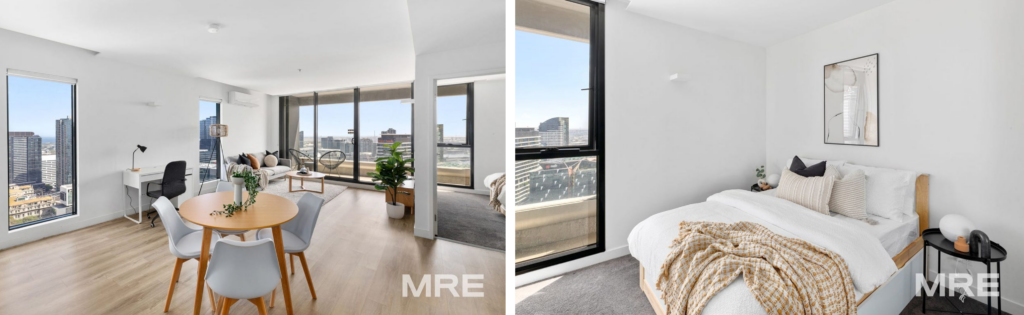
Click here to view the full listing and see the results in action.
2. The market decides your rent bracket in seconds
Tenants anchor price emotionally long before they rationalise it. The moment they see the photos, step into the living room, or scroll past your listing, they have already categorised the property into one of the following:
- Budget
- Mid-tier
- Premium
That positioning happens instantly, and presentation is what drives it. The rent you want doesn’t matter if the property doesn’t visually justify it. In most cases, the market decides your rent before the tenant even reads the description.
3. Small rental properties don’t lose tenants because of their size, they lose them because tenants don’t know how to furnish them.
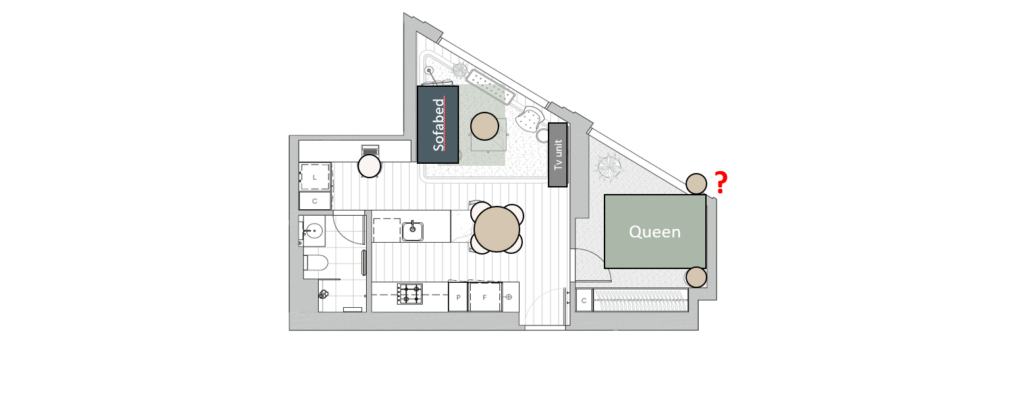
Small spaces can perform extremely well when they’re furnished with intention. But when they’re empty, tenants don’t see “potential”, they see risk. They can’t tell whether the layout will feel comfortable or claustrophobic once real furniture is added.
That uncertainty is what makes them hesitate, keep scrolling, or choose a larger apartment for the same price. Furnishing removes the doubt and reframes the property as efficient, not restrictive.
4. Design is all about how it works
Furnishing and styling isn’t just about how a space looks, it’s about how it supports daily living. The right pieces don’t simply “fill a room,” they solve problems: they create storage, define zones and improve flow.
Tenants aren’t just asking whether a bed or dining table fits, they’re subconsciously asking whether living there will feel easy or frustrating. Can they work comfortably, eat properly, unwind, and store their belongings without clutter? When the furniture answers those needs clearly, the property feels more liveable, more valuable, and far easier to say yes to.
5. The cost of bad design is higher than you think
Bad design doesn’t always look “bad”. Sometimes it simply feels uncomfortable; furniture blocking movement, poor layout choices, or rooms that feel tighter than they should. These small issues create hesitation, even if the tenant can’t fully explain why.
When tenants hesitate, they delay decisions, negotiate harder, or keep looking. Over time, poor design increases vacancy risk and turnover frequency.
6. Good tenants don’t chase “cheap”, they chase ease.
Bad design doesn’t always look “bad”. Sometimes it simply feels uncomfortable; furniture blocking movement, poor layout choices, or rooms that feel tighter than they should. These small issues create hesitation, even if the tenant can’t fully explain why.
When tenants hesitate, they delay decisions, negotiate harder, or keep looking. Over time, poor design increases vacancy risk and turnover frequency.
7. Presentation reduces negotiation before it even starts
Negotiation happens when tenants feel uncertainty. If a property feels unfinished, awkward, or hard to visualise, tenants instinctively try to reduce the price to offset that perceived risk. The more doubt they feel, the more they push.
A well-presented rental removes those doubts early, and when value feels obvious, negotiation pressure drops dramatically.
8. Furnished homes are treated differently
When tenants move into an empty rental, it often feels like a temporary arrangement. But when they walk into a furnished, cohesive space, the emotional response shifts. It feels more like a home and less like a holding zone.
That psychological shift matters. Tenants who feel proud of their space tend to respect it more. They maintain it better, report major issues sooner, and treat the property as something valuable rather than disposable.
9. Styling turns average into premium
Two identical apartments can rent for noticeably different amounts, even within the same building. The difference is rarely structural, and is usually purely based on the experience. One feels intentional and elevated, while the other feels flat and generic.
Styling enhances the perceived quality of the home. It creates atmosphere, clarity, and a sense of lifestyle. That shift alone can move a property into a higher rental category without changing a single fixture.
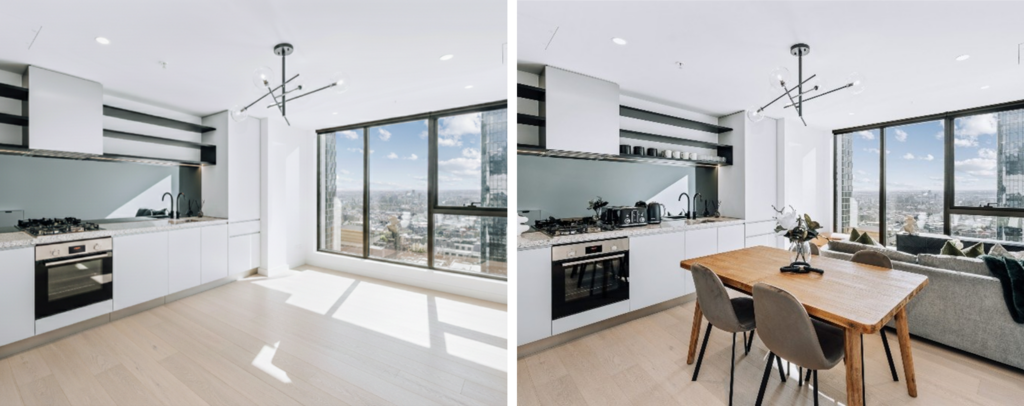
10. Vacancy is more expensive than styling will ever be.
We’ve seen investors hesitate over furnishing costs, only to absorb weeks of vacancy that quietly erode their annual return. One vacant month in a year is often more damaging than the entire cost of styling. Vacancy doesn’t just affect income, it affects leverage, confidence, and demand.
The longer a property sits, the more negotiation power tenants gain. Presentation reduces hesitation, hesitation shortens time on market, and time on market protects yield.
To put this into perspective, consider the 2BR apartment mentioned in point 1. A $17,000 furniture and styling package increased our client’s rent from $650/ week to $900/ week, generating an additional $13,000 in annual income.
By comparison, attempting a DIY setup could delay the property being leased by 3–6 weeks. At $900/ week, that would mean a loss of $2,700 for a 3-week delay or $5,400 for a 6-week delay. This alone could wipe out 20–40% of the first year’s gains and extend the payback period by several months.
Where to from here?
Each of these insights is worth reflecting on, especially if your goal is stronger, more consistent rental performance. Consider which of them apply to your property, and take action while the opportunity is still in front of you.
If you’d prefer to furnish the property yourself, use these principles as your guide and approach it with intention. And if you’d like expert support to achieve the strongest possible result, we’re here to handle the entire furnishing and styling process for you from start to finish. Feel free to explore our portfolio to see our work in action, and connect with us here when you’re ready to take the next step.