
Before You Buy Furniture, Read This.
When most people think about furnishing and decorating a property, their attention naturally turns to furniture styles, colour palettes, artwork, and accessories. While these elements are important, there is one fundamental principle that often determines whether a space feels effortless and inviting or cluttered and uncomfortable: spatial planning.
Furnishing a property without spatial planning is like building a house without a blueprint. You may have quality materials and a clear vision, but without a plan for how everything fits together, the result can feel disjointed, inefficient, and costly to correct later.
Simply put, even the most beautiful furniture can fail if it is placed in the wrong location.
What Is Spatial Planning?
Spatial planning involves analysing how people move through a space, how different areas are used, and how furnishings can best support those activities. It considers factors such as:
- Traffic flow and movement pathways
- Furniture scale and proportion
- Room functionality
- Visual balance and symmetry
- Ergonomics and user comfort
- Natural light and sightlines
- Storage requirements
The Benefits of Good Spatial Planning
It’s well known that a cluttered and poorly organised spaces can contribute to increased stress levels, mental fatigue, and difficulty concentrating.
A thoughtfully planned room creates a sense of order. It allows the brain to process information more efficiently because there are fewer visual and physical obstacles competing for attention. This results in reduced stress and anxiety, improved focus and greater feelings of control and relaxation.
This is particularly important in homes, where people seek refuge from the demands of daily life.
How Designers Approach Spatial Planning
While the benefits of spatial planning are significant, the question most homeowners ask is: What does good spatial planning actually look like?
Professional designers don’t simply place furniture where it fits. Every piece is carefully considered to ensure the space functions efficiently, feels balanced, and supports the way people live within it.
One of the first things designers evaluate is how people naturally move through a home. This is often referred to as traffic flow, and it forms the foundation of every successful furniture layout.
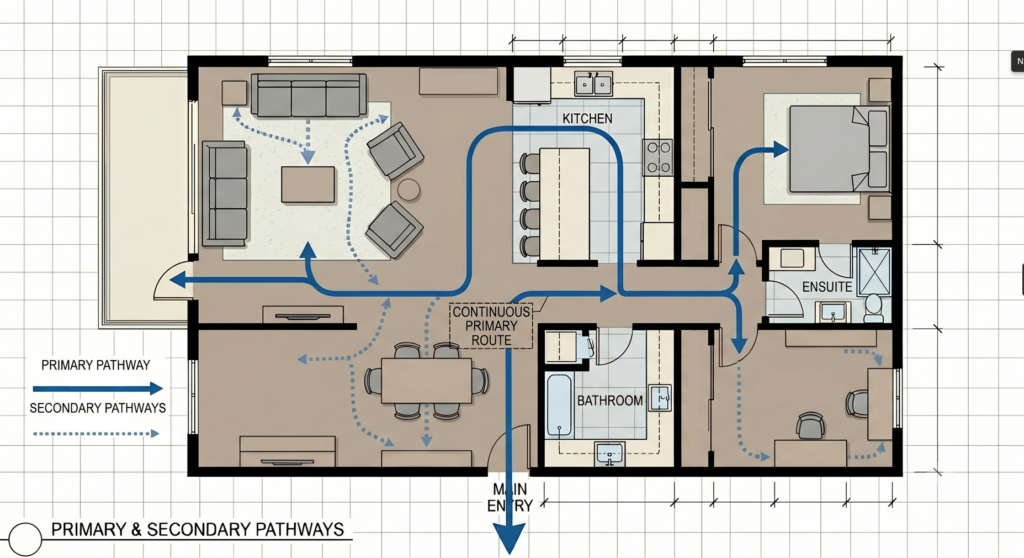
Understanding Pathways in Different Types of Homes
A clear pathway is simply an unobstructed route that allows people to move comfortably from one area to another without having to sidestep furniture, squeeze through gaps, or constantly change direction. Designers generally think about pathways in two ways:
Primary pathways – the routes you use most often, such as walking from the front door to the living room, or from the kitchen to the dining room.
Secondary pathways – the routes that help you access furniture and specific areas within a room, such as walking around a coffee table or accessing a wardrobe.
To create a space that feels comfortable and easy to move through, designers generally aim for:
- 900–1200mm for primary pathways
- 600–800mm for secondary pathways
However, these measurements aren’t strict rules. In apartments and smaller homes, pathways are often narrower due to space constraints.
In these situations:
- Primary pathways may be closer to 700–900mm
- Secondary pathways may reduce to around 500mm
The goal isn’t to achieve perfect measurements. It’s to create a space that feels comfortable and easy to move through.
A simple test is this:
If you can comfortably walk through a space carrying a basket of laundry, a shopping bag, or a cup of coffee without bumping into furniture, the pathway is probably working well.
If you have to turn sideways, shuffle around furniture, or constantly adjust your route, the layout is likely restricting the room’s potential.
Where Great Interiors Begin
Whether you’re furnishing a new property or refreshing an existing one, investing time in the planning stage is often the difference between a space that simply looks good and one that truly works. That’s why the most successful furnishing projects begin long before the furniture arrives.
If you’re looking to create a home that feels thoughtfully designed, perfectly furnished, and ready to enjoy from the moment you step through the door, an end-to-end furnishing service like ours can help bring that vision to life.